Against Cynicism
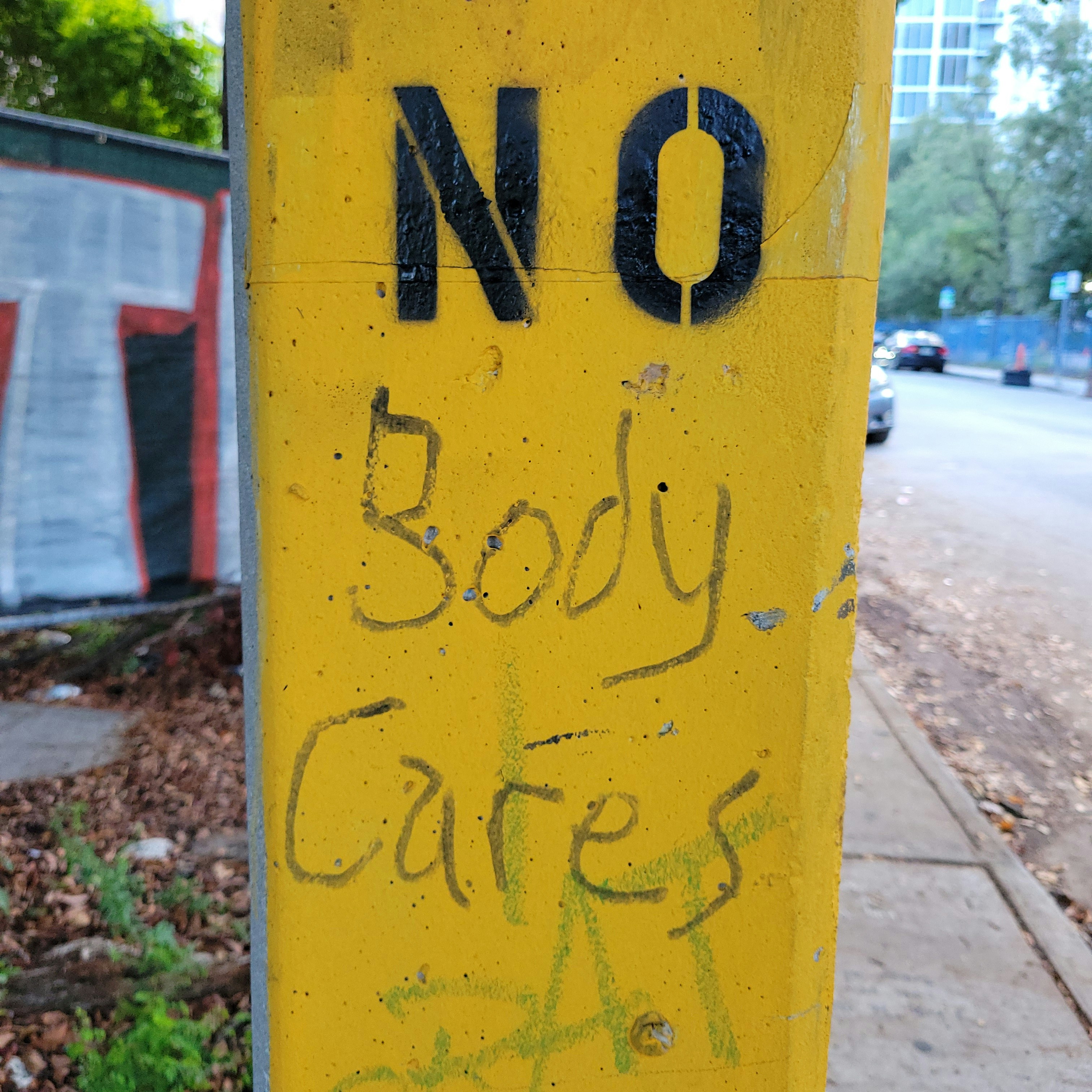
I want to make the case for human goodness. I want to be able to say that humans are lovely and generous and kind without being dismissed as naïve or one of those “positive” people. I want it to be taken seriously. And I want you to feel that you can say it too, without apology. This is important for two reasons. First, it matches what the science actually shows. Second, ignoring it costs us, both individually and collectively.
Somehow it has become intellectually fashionable to be wary of kindness. I have lost count of the number of times I hear someone on a podcast qualify something about the better sides of human nature with “Okay, I know this sounds corny, but…” as if speaking openly about care and decency is some kind of social faux pas. This doesn’t have to be the case.
Imagine a world where it was considered sophisticated to speak highly of human nature. Where public intellectuals in black turtlenecks sat in cafés and solemnly declared, “Humans… what they really want is to make a difference.”
I want to live in that world. Humans are good. People are generous and kind. We want to help others. And yes, we also look out for ourselves. We hurt each other sometimes, intentionally and unintentionally. Both sides exist. There’s no contradiction.
The point here is not to romanticize human nature. It’s to correct a bias. Making the case for human goodness matters for at least three reasons: it makes individuals happier, it shapes the behaviour we receive from others, and it determines the kind of society we build. Let’s look at each.
Cynicism makes us miserable
At the individual level, cynicism comes with a subtle but constant cost. If I move through the world assuming people are indifferent or out for themselves, I end up in a constant state of low-grade vigilance, which is exhausting over time. I know that people aren’t going to change their views overnight, but imagine what would happen if each of us softened our stance just a little, if each of us believed in others’ good intentions even three percent more than we do now. That small adjustment, multiplied across millions of interactions, would make a massive difference.
Cynicism brings out the worst in others
Cynicism doesn’t just influence how we feel. It influences how we interact with others and thus how they interact with us. Take something as simple as getting a coffee. If I approach the barista with a less-than-generous attitude, perhaps assuming incompetence or indifference (“ah, nose ring, I know the type…”), I will act slightly less generously while waiting, reply to her requests with less eye contact, less kindness, etc. She is busy, responds neutrally because I've not given her a reason to smile, which I then interpret as incompetence or indifference, and my belief is confirmed. If, however, I open myself up three percent more, the same moment could unfold totally differently: I walk in and assume she’s doing her best. She’s flustered, there’s a line, I wait, I smile, maybe even exchange a few words about the rush. She smiles back, we share a moment, I leave feeling like people are decent. So does she (if it happens enough times).Cynicism shapes the systems we design
Our assumptions about human nature scale upward into the systems we build. If we design for suspicion, we create environments that expect the worst and often end up producing it. But when we design for trust, for generosity, for the basic human desire to grow and contribute, the landscape looks entirely different.
You can see this contrast everywhere. Wikipedia exists because people were trusted to share what they know simply for the sake of sharing it. The whole project rests on a generous view of human nature, and the result is one of the most remarkable collaborative tools ever built.
Social businesses and mission-driven organisations grow from the same belief: that people want their work to matter. Volunteering and charities rely on it too. None of these would function if we assumed people fundamentally don’t care.
Even our schools and workplaces reflect these points of view. A school designed around the idea that children are naturally curious will look nothing like one that assumes children are lazy and must be threatened or rewarded into learning. A workplace that assumes people are lazy and individualistic will look different from one that assumes the opposite.
And we know which ones work better. Our beliefs about human nature influence how we design our systems, and those systems then become self-fulfilling prophecies.
The evidence: humans are more cooperative than we think
And the evidence is there. Across neuroscience, behavioural economics, social psychology, evolutionary anthropology, and developmental psychology, the pattern is consistent: our cooperative instincts are strong, reliable, and just as fundamental as our competitive ones.
Studies repeatedly show that altruistic motivation is powerful. People will often do more for others than they will do for themselves, and they sometimes help more readily when external rewards are lower. Young children show this pattern long before they understand social approval or incentives; they help because helping feels natural. This body of research is not fringe. It is broad, rigorous, and remarkably consistent.
And yet, whenever a study about human generosity reaches mainstream media, the headlines read as if something miraculous has occurred: “Can you believe it? People are good.” The surprise tells its own story. Our ambient cynicism is so strong that even well-established scientific findings are treated with shock.
“But people are selfish.” Yes. And that changes nothing.
Humans are self-interested, and humans are other-interested. Both are true. There is no contradiction.
I love my kids and care for them in a thousand unselfish ways. And I savor my time
alone and sometimes hide the last piece of dessert so I can selfishly eat it myself. Both truths coexist.
The same is true everywhere: it feels good to move and it feels good to rest; it feels good to eat sweet and it feels good to eat salty.
If someone says, “But people are selfish,” the answer is simply yes — and they are generous too. Look at your own life. How do you feel when you help someone? It feels good. How do you feel when you take time for yourself? It feels good. One doesn’t cancel the other out.
Designing a society that brings out our better side
The analogy with physical activity makes this clear. Humans have tendencies to be active and to rest. If we assumed that laziness was the “real” tendency, we would make life easier for cars, build fewer parks and playgrounds, and plant kids in front of screens. People would move less, and we would start making judgments about their character.
But this is less about character and more about design.
And this is exactly what we are doing with our cooperative instincts. People want to help, to matter, to make a difference. They also want to look out for themselves. Both are built in. But we’ve designed as though the selfish side is the only reliable side.
We’ve made helping harder than it needs to be.
And the cost is real: unhappier individuals, colder interactions, and a society that misses out on the strength and creativity that come from people contributing in small, human ways.
The path forward
If we trusted human goodness even slightly — three percent — more, the consequences would be significant. Individuals would be a bit less guarded, interactions a little lighter, and our systems perhaps a bit more open to our better sides.
Human goodness is real. It’s strong. And if we built our assumptions and our institutions around that fact, we’d end up with happier people and a stronger society.
Believing in human goodness is not naïve or “hippy-dippy.” It is both strategic and scientifically accurate. It is the foundation for designing a world that brings out the best in us.